


Optimization of Cutting Parameters: The Key to Improving Cut-Face Quality and Processing Efficiency
2026-09-18
Given the same equipment and the same steel plate, one manufacturer might produce a smooth cut surface free of dross, while another ends up with a surface covered in burrs that requires secondary grinding. The difference often lies not in the equipment itself, but in the cutting parameters. Power, speed, focal position, nozzle height, and assist gas—these five parameters collectively determine the upper limits of cut quality and processing efficiency.
Take laser cutting, for example: if the power is too high or the speed too slow, the kerf widens, the heat-affected zone expands, and burn marks appear on the cut surface. Conversely, if the power is insufficient or the speed too fast, the laser may fail to penetrate the material, leading to significant dross accumulation along the bottom edge. Focal position is equally critical: when cutting thin sheets, the focus should be set near the surface to achieve the narrowest possible kerf, whereas for thick plates, the focus must be shifted downward to ensure sufficient energy reaches the bottom edge. The pressure and purity of oxygen directly affect the finish of carbon steel cuts, while nitrogen pressure determines whether stainless steel can achieve an oxidation-free, bright surface.
The core logic of parameter optimization is to strike a balance between "achieving penetration" and "ensuring high-quality cuts." This typically begins with the manufacturer’s recommended settings, followed by incremental testing—adjusting speed and power while monitoring dross, burrs, and surface roughness—to fine-tune and lock in the optimal range. Experienced processing facilities usually maintain a proprietary parameter library for each material type and thickness, making minor adjustments based on the specific batch of material.
Furthermore, modern equipment supports adaptive parameter control: by monitoring factors such as spark patterns, melt pool temperature, or power feedback during the cutting process, the system can automatically fine-tune speed and gas pressure—effectively transforming human expertise into standardized, data-driven processes.
CUTTING METHOD

-
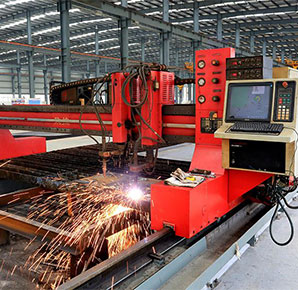 Flame cutting, also called oxyfuel cutting, is a common machining method for heavy plate.
Flame Cutting
-
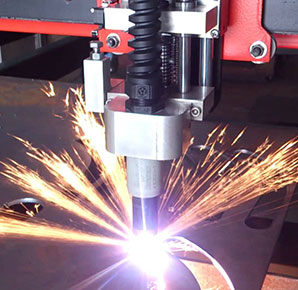
 Plasma cutting is a process that cuts through electrically conductive materials by means of an accelerated jet of hot plasma.
Plasma Cutting
-
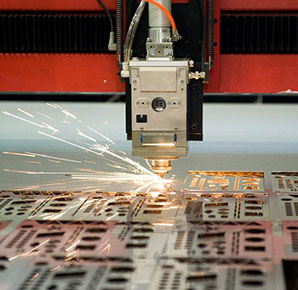
 Basically when cutting with the laser, the beam is focused on the material through the hole in the nozzle.
Laser Cutting
-
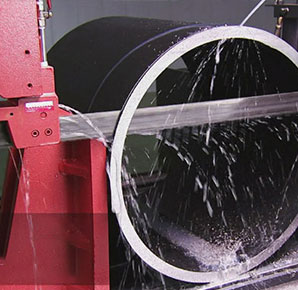 According to the form of the tool, sawing/ saw cutting is divided into bow sawing, circular sawing, band sawing and sawing of the grinding wheel.
Saw Cutting
Latest Products
-
 Carbon steel I-beams can be used in engineering construction, structural building , bridges and ships construction. Machining...
I-beam Steel Manufacturing
-
 Machining involved: flame cutting, beveling Application: engineering and ships building
Mild Steel Heavy Plates Cutting
-
 Material: stainless steel Machining involved: plasma cutting, grinding, polishing
Plasma Cutting Stainless Steel Plate
-
 Material: stainless steel Machining involved: flame cutting, polishing
Stainless Steel Seamless Tubes Cutting
-
 Our products cover the fields of construction machinery, power systems, material handling and transportation machinery, metall...
Carbon Steel Pipes
-
 Katalor can provide a wide range of laser cutting, plasma cutting, flame cutting or steel machining parts fabrication. Flame ...
Heavy Plates Flame Cutting
-
 Machining involved: cutting, grinding, beveling Application: shipsbuilding and marine industry
Carbon Steel Pipes Cutting
-
 Customized Steel Tube for Construction Equipped with laser cutting, CNC shearing, punching, bending, automatic riveting, auto...
Customized Steel Tube for Construction
CONTACT US
No limited to time and space, you can call for our online-service personnel for consultation, or fill in the table below for an enquiry. Your message will be promptly resolved.
- Tel:+86-21-61182423
- Fax:+86-21-61182425
- E-mail:[email protected]
- Skype:shanghai.katalor
- Address:Unit 6,lane 2500,xiupu Road,Kangqiao Industrial Area,Pudong New District,Shanghai
- Online Consultation
- After-sales Engineer