


Intelligent Cutting Systems: How AI and Visual Recognition Are Reshaping the Material Cutting Proces
2026-09-25
In traditional cutting workshops, the keen eye and seasoned experience of veteran craftsmen have long been the cornerstone of quality assurance. Today, however, AI algorithms and visual recognition technologies are migrating these "human capabilities" into digital systems, shifting the cutting process from an experience-driven model to one that is data-driven.
Visual recognition first delivers value by providing "clear visibility." High-definition industrial cameras and laser sensors capture the sparks, the state of the molten pool, and the cutting kerf in real time. The system can detect issues—such as a clogged nozzle, plate misalignment, or mismatched parameters—within milliseconds, triggering immediate alerts or automatic corrections. In the loading phase, visual positioning systems can automatically identify the precise location of steel plates and detect edge defects, eliminating the need for manual marking and tool alignment.
AI, meanwhile, ensures "accurate decision-making." Machine learning models, trained on historical data, can automatically recommend optimal cutting parameters based on material type, plate thickness, and nozzle condition. Intelligent nesting algorithms can complete layout calculations in seconds—tasks that once took a veteran craftsman half an hour—typically boosting material utilization by 5–10 percentage points. Furthermore, by continuously analyzing equipment current and vibration data, the system can predict component wear days in advance, nipping unplanned downtime in the bud.
Together, these technologies create a closed-loop "perception-decision-execution" process: the visual system identifies an issue, the AI determines the cause and adjusts the parameters, and the equipment executes the correction instantly. This transforms the role of the operator from a manual machine attendant into an engineer who manages multiple production lines.
The primary challenge lies in the accumulation and standardization of data. Since every enterprise uses different materials, equipment, and processes, AI models require extensive local data to achieve reliable performance. Nevertheless, the trajectory is clear: the cutting workshops of the future will not be defined by the intuition of veteran craftsmen, but by who possesses the most robust data and the most advanced algorithms. Intelligent cutting systems are no longer mere concepts; they represent a pivotal shift currently reshaping the industry.
CUTTING METHOD

-
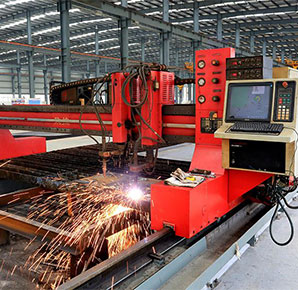 Flame cutting, also called oxyfuel cutting, is a common machining method for heavy plate.
Flame Cutting
-
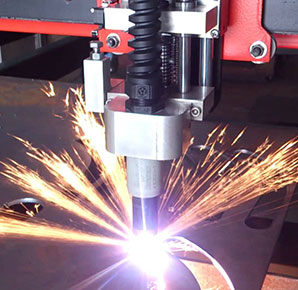
 Plasma cutting is a process that cuts through electrically conductive materials by means of an accelerated jet of hot plasma.
Plasma Cutting
-
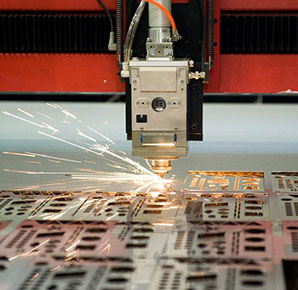
 Basically when cutting with the laser, the beam is focused on the material through the hole in the nozzle.
Laser Cutting
-
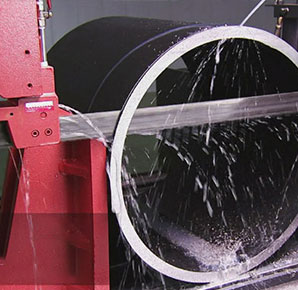 According to the form of the tool, sawing/ saw cutting is divided into bow sawing, circular sawing, band sawing and sawing of the grinding wheel.
Saw Cutting
Latest Products
-
 Machining involved: cutting, grinding
Metal Steel Cutting for Construction Machinery
-
 Katalor can provide a wide range of laser cutting, plasma cutting, flame cutting or steel machining parts fabrication.Carbon S...
Carbon Steel Ellipsoidal Head with Cutting Hol
-
 Application: ships building, construction. Katalor can provide a wide range of laser cutting, plasma cutting, flame cutting or...
Mild Steel Angle Cutting Parts
-
 Machining involved: saw cutting, grinding, surface treatment Application: construction structure
Profile Steel Cutting
-
 Special Shaped Steel Cutting is for Construction.
Special Shaped Steel Cutting for Construction
-
 Katalor can provide a wide range of laser cutting, plasma cutting, flame cutting or steel machining parts fabrication. Flame ...
Heavy Plates Flame Cutting
-
 Material: stainless steel 304 Machining involved: cutting, grinding, drilling, beveling, surface treatment
Stainless Steel Tube Machining Parts
-
 Machining involved: saw cutting, grinding, surface treatment
Carbon Steel Bars Customized Cutting
CONTACT US
No limited to time and space, you can call for our online-service personnel for consultation, or fill in the table below for an enquiry. Your message will be promptly resolved.
- Tel:+86-21-61182423
- Fax:+86-21-61182425
- E-mail:[email protected]
- Skype:shanghai.katalor
- Address:Unit 6,lane 2500,xiupu Road,Kangqiao Industrial Area,Pudong New District,Shanghai
- Online Consultation
- After-sales Engineer