


What are the common cutting methods for steel
The common cutting methods for steel mainly include the following:
-
Abrasive Wheel Cutting Principle: It uses a high-speed rotating abrasive wheel for cutting. Characteristics: It is lightweight, flexible, simple, and convenient to use, suitable for various occasions, especially common in construction sites and indoor renovations. It is mainly used for cutting square tubes, round tubes, and shaped tubes with small diameters.
-
Saw Cutting Principle: It cuts the workpiece or material by creating a narrow slot with a saw blade. Equipment: Metal band saw machines are commonly used for this purpose. Precautions: When cutting, select an appropriate saw blade based on the material's hardness and adjust to the optimal cutting speed. Saw cutting is suitable for various types of steel and steel structural members such as beams and columns, offering high cutting accuracy.
-
Flame Cutting Principle: It utilizes the high temperature generated by the combustion of industrial gas mixed with oxygen to oxidize and melt the steel, achieving the purpose of cutting. Advantages: Low cost, simple operation, mature technology, and wide application. Disadvantages: Large heat-affected zone and thermal deformation, rough cross-section with slag inclusion. Flame cutting is only applicable to carbon steel plates and not suitable for other types of metals such as stainless steel or copper and aluminum alloys.
-
Plasma Cutting Principle: It uses the heat of a high-temperature plasma arc to locally melt (and evaporate) the metal at the cut of the workpiece, and the momentum of high-speed plasma removes the molten metal to form a cut. Characteristics: Fast cutting speed, especially when cutting ordinary carbon steel sheets, which can reach 5 to 6 times the speed of oxygen cutting; smooth cutting surface, small thermal deformation, and minimal heat-affected zone. Plasma cutting can handle materials within a thickness of 100mm and is not limited to carbon steel plates, capable of cutting stainless steel, copper and aluminum alloys, nickel-titanium metals, and more.
-
Laser Cutting Principle: It uses a high-energy laser beam to heat, locally melt, and vaporize the metal to complete the cutting of materials. Advantages: Excellent cutting quality, fast cutting speed, high dimensional accuracy (up to ±0.05mm); small heat-affected zone with minimal deformation of the workpiece. Disadvantages: Expensive equipment, with a laser cutting machine costing millions of yuan.
-
Waterjet Cutting Principle: It uses high-pressure water jets (sometimes mixed with abrasives such as garnet or carbide for assisted cutting) to cut metals. Characteristics: Capable of one-time cutting of any material along any curve; the heat generated during cutting is immediately carried away by the high-speed water jet, eliminating thermal effects. Waterjet cutting can achieve an accuracy of 0.4mm or higher.
-
Mechanical Cutting Classification: Includes shears, steel profile punching shears, combined punching shears, toothless saws, abrasive wheel saws, etc. Characteristics: Shears, steel profile punching shears, and combined punching shears: fast cutting speed, neat cuts, and high efficiency, suitable for cutting thin steel plates and cold-formed purlins. Toothless saw: Fast cutting speed, capable of cutting various shapes and types of steel profiles, steel tubes, and steel plates, but the cuts are not smooth, with high noise levels, suitable for components with lower sawing accuracy requirements or those with allowance for final finishing. Abrasive wheel saw: Smooth cuts with thin burs that are easy to remove, but high noise levels and dust production, suitable for cutting thin-walled steel profiles and small steel tubes, with a maximum material thickness of 4mm.
In summary, there are various cutting methods for steel, each with its unique characteristics and application scope. When selecting a cutting method, comprehensive consideration should be given to factors such as the steel's material, thickness, shape, and cutting requirements.
CUTTING METHOD

-
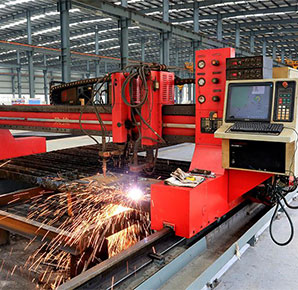 Flame cutting, also called oxyfuel cutting, is a common machining method for heavy plate.
Flame Cutting
-
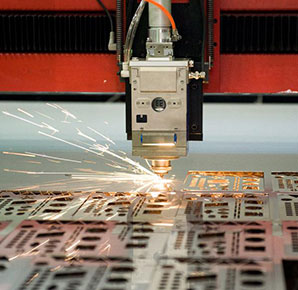 Plasma cutting is a process that cuts through electrically conductive materials by means of an accelerated jet of hot plasma.
Plasma Cutting
-
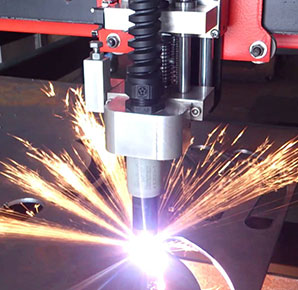 Basically when cutting with the laser, the beam is focused on the material through the hole in the nozzle.
Laser Cutting
-
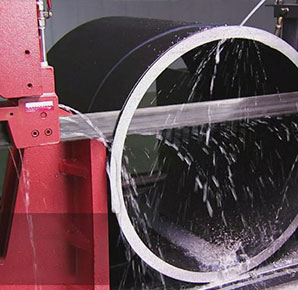 According to the form of the tool, sawing/ saw cutting is divided into bow sawing, circular sawing, band sawing and sawing of the grinding wheel.
Saw Cutting
Latest Products
-
 Katalor can provide a wide range of laser cutting, plasma cutting, flame cutting or steel machining parts fabrication. Flame ...
Heavy Plates Flame Cutting
-
 Machining involved: saw cutting, grinding, surface treatment
Carbon Steel Bars Customized Cutting
-
 Katalor can provide a wide range of laser cutting, plasma cutting, flame cutting or steel machining parts fabrication.Carbon S...
Carbon Steel Ellipsoidal Head with Cutting Hol
-
 Material: carbon steel Machining involved: flame cutting, stamping, sheet metal, grinding Application: manfuacturing
Heavy Plates Cutting Parts
-
 Material: stainless steel Machining involved: plasma cutting, grinding, polishing
Plasma Cutting Stainless Steel Plate
-
 Special Shaped Steel Cutting is for Construction.
Special Shaped Steel Cutting for Construction
-
 Machining involved: flame cutting, beveling Application: engineering and ships building
Mild Steel Heavy Plates Cutting
-
 Our products cover the fields of construction machinery, power systems, material handling and transportation machinery, metall...
Carbon Steel Pipes
CONTACT US
No limited to time and space, you can call for our online-service personnel for consultation, or fill in the table below for an enquiry. Your message will be promptly resolved.
- Tel:+86-21-61182423
- Fax:+86-21-61182425
- E-mail:[email protected]
- Skype:shanghai.katalor
- Address:Unit 6,lane 2500,xiupu Road,Kangqiao Industrial Area,Pudong New District,Shanghai
- Online Consultation
- After-sales Engineer