


The Era of Precision Machining: Breakthroughs and Challenges in Micron-Scale Cutting Technology
2026-09-04
Micron-level machining is ushering metal processing into an "era of precision cutting." As machining tolerances shift from the micron (or "si"—one-hundredth of a millimeter) scale toward the sub-micron range, cutting is no longer merely a process of material removal; it has evolved into a complex system engineering endeavor encompassing machine tools, cutting tools, processes, and metrology. From precision molds and optical components to medical devices and semiconductor parts, micron-level machining has become a key differentiator for competitiveness in high-end manufacturing.
Technological breakthroughs are evident on three fronts: ultra-precision machine tools utilize air bearings or hydrostatic guideways, enabling spindle rotational accuracy at the sub-micron level; the combination of diamond or ultra-fine-grained cemented carbide tools with minimum-quantity lubrication (MQL) allows for the stable removal of material at chip thicknesses of just tens of microns; and in-process measurement combined with closed-loop compensation enables machining errors to be detected and corrected within milliseconds—facilitating a "cut-measure-correct" workflow.
However, the challenges are equally acute. In micron-level machining, even minor cutting forces and heat are sufficient to cause thermal deformation in the workpiece or tool deflection. The sensitivity of surface quality to tool wear is amplified exponentially; a dulling of the cutting edge by just a few microns can lead to edge chipping. Furthermore, machine tool vibrations, fluctuations in ambient temperature, and even minute seismic vibrations from the foundation can be magnified into unacceptable machining errors.
Regarding materials, difficult-to-machine substances—such as titanium alloys, ceramics, and composites—further narrow the process window. In terms of costs, ultra-precision equipment often carries price tags in the millions of yuan, creating a formidable barrier to entry for small and medium-sized enterprises.
The path forward lies in digitalization: cutting databases, digital twin simulations, and AI-driven process optimization will transform precision machining—traditionally reliant on the tacit knowledge of veteran craftsmen—into a standardized, predictable, and replicable process. Those who achieve this transition first will secure the power to dictate pricing in the "micron era."
CUTTING METHOD

-
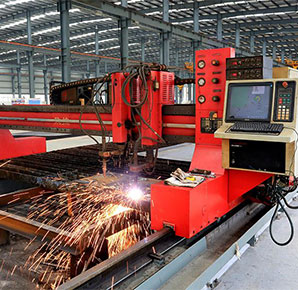 Flame cutting, also called oxyfuel cutting, is a common machining method for heavy plate.
Flame Cutting
-
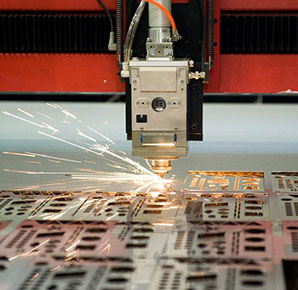 Plasma cutting is a process that cuts through electrically conductive materials by means of an accelerated jet of hot plasma.
Plasma Cutting
-
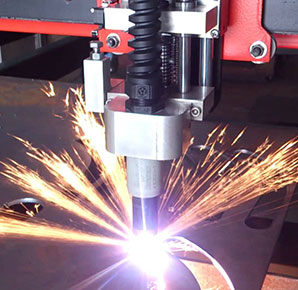 Basically when cutting with the laser, the beam is focused on the material through the hole in the nozzle.
Laser Cutting
-
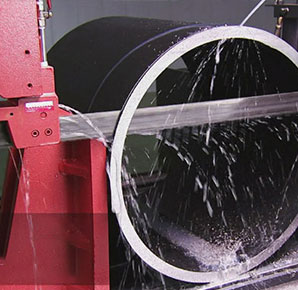 According to the form of the tool, sawing/ saw cutting is divided into bow sawing, circular sawing, band sawing and sawing of the grinding wheel.
Saw Cutting
Latest Products
-
 Machining involved: saw cutting, grinding, surface treatment
Saw Cutting for Alloy Steel Bars
-
 Special Shaped Steel Cutting is for Construction.
Special Shaped Steel Cutting for Construction
-
 Material: carbon steel. Machining involved: saw cutting; Whole inspection procedures (IQC, PQC and FQC) and QA plan are carri...
Square Pipes Cutting
-
 Material: carbon steel Machining involved: flame cutting, stamping, sheet metal, grinding Application: manfuacturing
Heavy Plates Cutting Parts
-
 Material: stainless steel Machining involved: plasma cutting, grinding, polishing
Plasma Cutting Stainless Steel Plate
-
 Machining involved: saw cutting, grinding, surface treatment Application: construction structure
Profile Steel Cutting
-
 Material: stainless steel 304 Machining involved: cutting, grinding, drilling, beveling, surface treatment
Stainless Steel Tube Machining Parts
-
 Carbon steel I-beams can be used in engineering construction, structural building , bridges and ships construction. Machining...
I-beam Steel Manufacturing
CONTACT US
No limited to time and space, you can call for our online-service personnel for consultation, or fill in the table below for an enquiry. Your message will be promptly resolved.
- Tel:+86-21-61182423
- Fax:+86-21-61182425
- E-mail:[email protected]
- Skype:shanghai.katalor
- Address:Unit 6,lane 2500,xiupu Road,Kangqiao Industrial Area,Pudong New District,Shanghai
- Online Consultation
- After-sales Engineer