


What are the advantages of laser cutting for automobile steel parts
In the manufacturing of automotive steel components, laser cutting technology has become an indispensable processing method in the automotive industry, thanks to its core advantages such as wide material adaptability, high processing precision, a small heat-affected zone, high material utilization, high cutting efficiency, and strong flexible production capabilities.
Wide Material Adaptability: Laser cutting can process commonly used automotive materials such as low-carbon low-alloy steel, high-strength steel, stainless steel, and aluminum alloy, covering the manufacturing requirements of key components including body, chassis, and powertrain systems. For instance, the cutting of hot-formed high-strength steel (with a strength of up to 1500 MPa) relies on laser technology. Its concentrated energy characteristic can prevent grain growth in the material, ensuring weld quality.
High Processing Precision: Laser cutting achieves a precision of ±0.05 mm, far surpassing traditional plasma cutting (±0.5 mm) and flame cutting (±1 mm), meeting the stringent dimensional requirements for holes and trimming in automotive components. For example, the cutting of automotive airbags requires seamless connections, and laser cutting can achieve high-precision cutting, reducing the risk of head injuries by 25% and facial injuries by 80%.
Small Heat-Affected Zone: With concentrated energy, laser cutting has a heat input that is only one-tenth of that of flame cutting, reducing thermal deformation in the material. For ferritic stainless steel (prone to grain growth) and high-strength steel (prone to hardening), laser cutting can avoid microstructural changes, enhancing weld strength and extending the service life of components.
High Material Utilization: The kerf width of laser cutting is only 0.1–0.3 mm, significantly reducing material loss compared to plasma cutting (1–3 mm) and flame cutting (3–5 mm). Additionally, laser cutting supports nesting processes, allowing full utilization of scrap materials. For example, different components with the same plate thickness and material can be cut on the same plate, increasing material utilization by 15%–20%.
High Cutting Efficiency: Laser cutting can reach speeds of up to 300 mm/s, which is 3–5 times faster than plasma cutting and over 10 times faster than flame cutting. For example, when cutting a 3 mm-thick low-carbon steel plate, laser cutting takes only 10 seconds, while plasma cutting requires 30 seconds and flame cutting takes 60 seconds. Furthermore, laser cutting eliminates the need for drilling operations, enabling one-step cutting of holes and trimming, thereby shortening production cycles.
Strong Flexible Production Capabilities: Laser cutting does not require molds and can quickly switch between processing drawings, adapting to customized demands for small batches and multiple varieties. For instance, the cutting of battery trays for new energy vehicles requires dimensional adjustments according to different vehicle models. Laser cutting can complete drawing modifications and commence production within 2 hours, whereas mold stamping requires new mold development, with a cycle lasting 2–4 weeks.
CUTTING METHOD

-
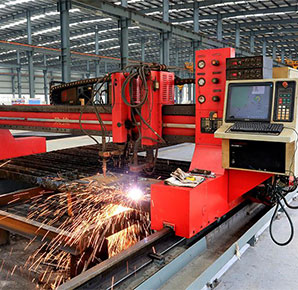 Flame cutting, also called oxyfuel cutting, is a common machining method for heavy plate.
Flame Cutting
-
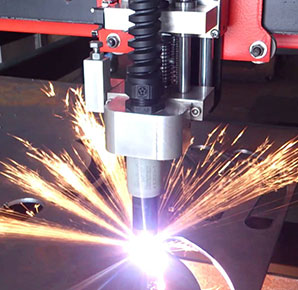
 Plasma cutting is a process that cuts through electrically conductive materials by means of an accelerated jet of hot plasma.
Plasma Cutting
-
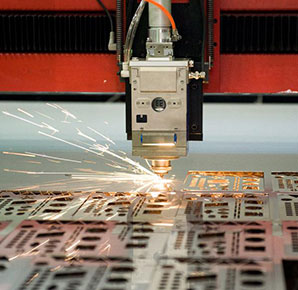
 Basically when cutting with the laser, the beam is focused on the material through the hole in the nozzle.
Laser Cutting
-
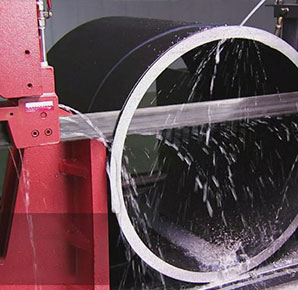 According to the form of the tool, sawing/ saw cutting is divided into bow sawing, circular sawing, band sawing and sawing of the grinding wheel.
Saw Cutting
Latest Products
-
 Our products cover the fields of construction machinery, power systems, material handling and transportation machinery, metall...
Carbon Steel Pipes
-
 Katalor can provide a wide range of laser cutting, plasma cutting, flame cutting or steel machining parts fabrication.Carbon S...
Carbon Steel Ellipsoidal Head with Cutting Hol
-
 Machining involved: cutting, grinding, beveling Application: shipsbuilding and marine industry
Carbon Steel Pipes Cutting
-
 Customized Steel Tube for Construction Equipped with laser cutting, CNC shearing, punching, bending, automatic riveting, auto...
Customized Steel Tube for Construction
-
 Material: stainless steel 304 Machining involved: cutting, grinding, drilling, beveling, surface treatment
Stainless Steel Tube Machining Parts
-
 Special Shaped Steel Cutting is for Construction.
Special Shaped Steel Cutting for Construction
-
 Machining involved: cutting, grinding
Metal Steel Cutting for Construction Machinery
-
 Machining involved: saw cutting, grinding, surface treatment
Carbon Steel Bars Customized Cutting
CONTACT US
No limited to time and space, you can call for our online-service personnel for consultation, or fill in the table below for an enquiry. Your message will be promptly resolved.
- Tel:+86-21-61182423
- Fax:+86-21-61182425
- E-mail:[email protected]
- Skype:shanghai.katalor
- Address:Unit 6,lane 2500,xiupu Road,Kangqiao Industrial Area,Pudong New District,Shanghai
- Online Consultation
- After-sales Engineer