


What Are the Advantages of Using Laser Cutting for Alloy Steel Equal Angles
What Are the Advantages of Using Laser Cutting for Alloy Steel Equal Angles?
1. High Precision and Superior Cutting Quality
Precision Control: Laser cutting achieves micron-level precision by focusing a high-energy beam, with tolerances controlled within ±0.05mm—far exceeding the accuracy of traditional flame or plasma cutting. This ensures smooth, flat cutting edges on alloy steel equal angles, eliminating the need for secondary grinding and directly meeting precision assembly requirements.
Minimal Heat-Affected Zone (HAZ): The localized heating characteristic of laser cutting results in a HAZ width of just 0.1–0.3mm, significantly narrower than the 1–2mm of plasma cutting. This effectively prevents deformation or hardness changes caused by thermal stress in alloy steel, making it ideal for applications sensitive to material properties.
Burr-Free and Slag-free: During laser cutting, molten metal is completely blown away by high-pressure gas, leaving no residual burrs or slag on the cut surface. This reduces post-cutting cleanup steps and enhances production efficiency.
2. Efficient Cutting and Optimized Material Utilization
Cutting Speed Advantage: For example, a 12kW fiber laser can cut 10mm-thick alloy steel at speeds up to 1.5m/min—2–3 times faster than plasma cutting and 5–10 times faster than flame cutting. For batch processing of equal angles, laser cutting significantly shortens production cycles.
Improved Material Utilization: Laser cutting enables tight nesting of parts through computer-aided design (CAD), boosting material utilization to over 95%. This reduces waste by 10%–15% compared to traditional cutting methods, lowering raw material costs.
3. Complex Shape and Customized Processing Capabilities
Unlimited 2D Complexity: Laser cutting effortlessly handles irregular cuts on equal angles, such as holes, chamfers, and curved edges, without requiring tool changes or mold adjustments. This supports rapid responses to customized customer demands and shortens product development cycles.
Multi-angle Cutting Support: Using five-axis laser cutting machines, equal angles can be cut at multiple angles in 3D space, meeting complex process requirements like welding beveling and structural connections while enhancing processing flexibility.
4. Automated and Intelligent Production Integration
CNC Control and Automation: Laser cutting machines automate cutting path planning via CNC systems and integrate with robots, conveyors, and other equipment to create unmanned production lines. This reduces manual intervention and improves production stability.
Real-Time Monitoring and Feedback: Some high-end laser cutters are equipped with cutting quality monitoring systems that detect parameters (e.g., power, speed, gas pressure) in real time and adjust automatically to ensure consistent cutting quality.
CUTTING METHOD

-
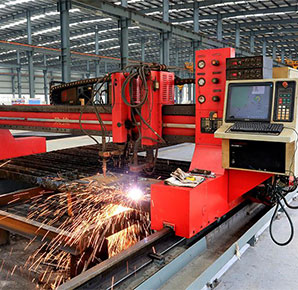 Flame cutting, also called oxyfuel cutting, is a common machining method for heavy plate.
Flame Cutting
-
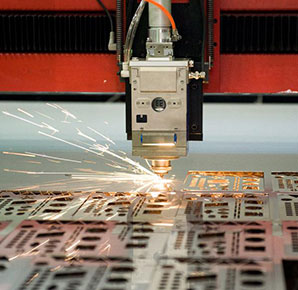 Plasma cutting is a process that cuts through electrically conductive materials by means of an accelerated jet of hot plasma.
Plasma Cutting
-
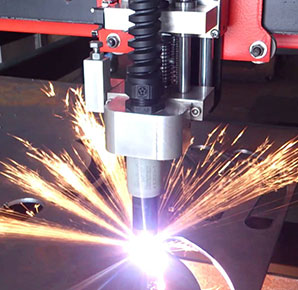 Basically when cutting with the laser, the beam is focused on the material through the hole in the nozzle.
Laser Cutting
-
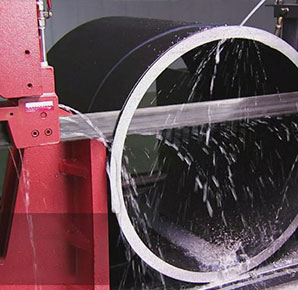 According to the form of the tool, sawing/ saw cutting is divided into bow sawing, circular sawing, band sawing and sawing of the grinding wheel.
Saw Cutting
Latest Products
-
 Machining involved: cutting, grinding, beveling Application: shipsbuilding and marine industry
Carbon Steel Pipes Cutting
-
 Material: carbon steel. Machining involved: saw cutting; Whole inspection procedures (IQC, PQC and FQC) and QA plan are carri...
Square Pipes Cutting
-
 Our products cover the fields of construction machinery, power systems, material handling and transportation machinery, metall...
Carbon Steel Pipes
-
 Katalor can provide a wide range of laser cutting, plasma cutting, flame cutting or steel machining parts fabrication. Flame ...
Heavy Plates Flame Cutting
-
 Customized Heavy Plates Cutting Parts are for Engineering Machinery. Material: carbon steel Machining involved: flame cutting...
Customized Heavy Plates Cutting Parts
-
 Machining involved: plasma cutting, grinding, polishing Application: construction
Stainless Steel Cutting Parts
-
 Application: ships building, construction. Katalor can provide a wide range of laser cutting, plasma cutting, flame cutting or...
Mild Steel Angle Cutting Parts
-
 Machining involved: saw cutting, grinding, surface treatment
Saw Cutting for Alloy Steel Bars
CONTACT US
No limited to time and space, you can call for our online-service personnel for consultation, or fill in the table below for an enquiry. Your message will be promptly resolved.
- Tel:+86-21-61182423
- Fax:+86-21-61182425
- E-mail:[email protected]
- Skype:shanghai.katalor
- Address:Unit 6,lane 2500,xiupu Road,Kangqiao Industrial Area,Pudong New District,Shanghai
- Online Consultation
- After-sales Engineer