


Applications of Mild Steel Heavy Plates
Mild Steel Heavy Plates (low-carbon heavy steel plates), renowned for their high plasticity, strength, and cost-effectiveness due to their low carbon content (typically 0.05%–0.25%), are widely utilized across multiple industrial sectors.
I. Construction and Infrastructure
1. Structural Support and Bridge Construction
Application Scenarios: Serve as critical materials for building frames, bridge girders, and support structures, enduring both static and dynamic loads.
Advantages: Low carbon content ensures excellent weldability and fatigue resistance, making them ideal for large-scale structural welding; high strength (400–550 MPa) guarantees long-term stability.
Case Study: Low-carbon heavy steel plates are employed in the roof trusses of large shopping malls and steel structures of sports stadiums, enabling large-span column-free space designs.
2. Pipeline and Pressure Vessel Fabrication
Application Scenarios: Used in storage tanks, pipelines, and pressure vessels within the oil and chemical industries.
Advantages: Enhanced corrosion resistance through chromium and molybdenum additions, adapting to chemical environments like acids, alkalis, and salts; high toughness (e.g., impact energy ≥42 J at -50°C) meets low-temperature operational requirements.
Case Study: Low-carbon heavy steel plates are utilized for LNG storage tank liners, maintaining structural integrity after cryogenic treatment.
II. Industrial Equipment Manufacturing
1. Heavy Machinery and Production Line Equipment
Application Scenarios: Applied in machine tool beds, production line frames, and chemical equipment requiring heavy-load and vibration resistance.
Advantages: High rigidity and impact resistance ensure stable equipment operation; ease of processing (cutting, bending, welding) reduces manufacturing costs.
Case Study: The stamping machine bases on automotive production lines use low-carbon heavy steel plates to support high-frequency impact loads.
2. Shipbuilding and Offshore Engineering
Application Scenarios: Used in hull structures, decks, and offshore platform supports.
Advantages: Seawater corrosion resistance is further improved through galvanizing or alloying treatments; the combination of high strength and lightweight design optimizes vessel performance.
Case Study: Bulk carrier cargo hold floors are constructed with low-carbon heavy steel plates to withstand heavy cargo loads and seawater erosion.
III. Energy and Transportation
1. Energy Equipment Manufacturing
Application Scenarios: Employed in wind turbine towers, solar panel supports, and nuclear power plant containment structures.
Advantages: High strength and weather resistance adapt to extreme environments; ease of processing supports complex structural designs.
Case Study: Offshore wind turbine towers use low-carbon heavy steel plates to resist ocean winds and wave loads.
2. Transportation Vehicle Manufacturing
Application Scenarios: Utilized in automotive chassis, train carriages, and truck frames.
Advantages: Balanced high strength and lightweight design improve fuel efficiency; impact resistance ensures passenger safety.
Case Study: Electric vehicle battery trays are made from low-carbon heavy steel plates, balancing structural strength and weight control.
CUTTING METHOD

-
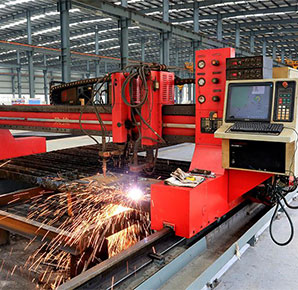 Flame cutting, also called oxyfuel cutting, is a common machining method for heavy plate.
Flame Cutting
-
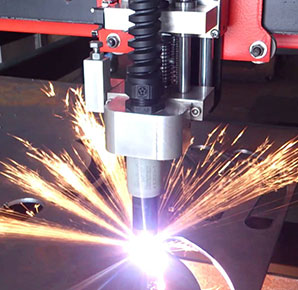
 Plasma cutting is a process that cuts through electrically conductive materials by means of an accelerated jet of hot plasma.
Plasma Cutting
-
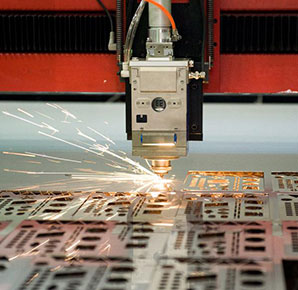
 Basically when cutting with the laser, the beam is focused on the material through the hole in the nozzle.
Laser Cutting
-
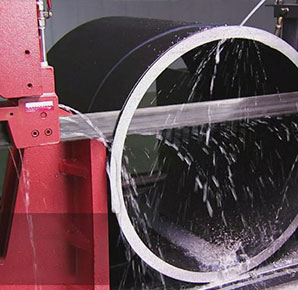 According to the form of the tool, sawing/ saw cutting is divided into bow sawing, circular sawing, band sawing and sawing of the grinding wheel.
Saw Cutting
Latest Products
-
 Application: ships building, construction. Katalor can provide a wide range of laser cutting, plasma cutting, flame cutting or...
Mild Steel Angle Cutting Parts
-
 Machining involved: flame cutting, beveling Application: engineering and ships building
Mild Steel Heavy Plates Cutting
-
 Machining involved: cutting, bending, drilling, surface treatment
Cutting Alloy Steel Equal Angles
-
 Customized Heavy Plates Cutting Parts are for Engineering Machinery. Material: carbon steel Machining involved: flame cutting...
Customized Heavy Plates Cutting Parts
-
 Material: stainless steel. Laser cutting: high precision, fastest cutting method, suitable for cutting iron steel within 20mm....
Automobile Steel Parts
-
 Machining involved: plasma cutting, grinding, polishing Application: construction
Stainless Steel Cutting Parts
-
 Our products cover the fields of construction machinery, power systems, material handling and transportation machinery, metall...
Carbon Steel Pipes
-
 Katalor can provide a wide range of laser cutting, plasma cutting, flame cutting or steel machining parts fabrication.Carbon S...
Carbon Steel Ellipsoidal Head with Cutting Hol
CONTACT US
No limited to time and space, you can call for our online-service personnel for consultation, or fill in the table below for an enquiry. Your message will be promptly resolved.
- Tel:+86-21-61182423
- Fax:+86-21-61182425
- E-mail:[email protected]
- Skype:shanghai.katalor
- Address:Unit 6,lane 2500,xiupu Road,Kangqiao Industrial Area,Pudong New District,Shanghai
- Online Consultation
- After-sales Engineer