


Laser Cutting Technology: An Industrial Tool for High-Precision Machining
2026-08-04
Laser cutting technology is reshaping the global manufacturing landscape at a remarkable pace. Its core principle is straightforward: a focused, high-power laser beam strikes the workpiece, rapidly melting or vaporizing the material, while a high-speed gas stream blows away the molten matter to create an extremely narrow kerf. Yet, it is precisely this precise control of "light and heat" that grants the technology an irreplaceable role in industrial processing.
Precision is the sharpest "weapon" of laser cutting. The actual focal spot diameter can be controlled between 0.1 and 0.4 mm, the kerf width is approximately 0.5 mm, and the dimensional accuracy of cut parts can reach ±0.2 mm. In comparison, plasma cutting typically produces a kerf width of 1 to 2 mm and offers precision within 1 mm.
This means laser cutting saves more material and yields cuts with excellent parallelism and perpendicularity; in many applications, the cut edges are suitable for immediate welding without the need for secondary processing.
There is a clear trade-off between cutting speed and material thickness. Using a 1,200W laser, the cutting speed for 2mm low-carbon steel can reach 600 cm/min; for a 5mm-thick polypropylene resin sheet, the speed can even reach 1,200 cm/min. Industrial laser cutting is typically applied to thicknesses of less than 20mm (for carbon steel), as cutting speeds drop significantly as thickness increases. While plasma cutting can handle a thickness range of 0 to 120mm, its precision and cut quality fall far short of laser cutting, making it better suited for thick plates or applications where high precision is not required.
Market data confirms the dominant position of this technology. The global laser cutting machine market is valued at $6.85 billion in 2025 and is projected to grow to $18.43 billion by 2034, representing a compound annual growth rate (CAGR) of 12%. The Asia-Pacific region leads the global market, accounting for a 37.6% share in 2025. Within this sector, fiber lasers—leveraging their efficiency advantages in thin-sheet processing—are expected to capture a 29.44% market share by 2026, while automotive manufacturing stands as the largest end-use application, accounting for 41.8% of the market.
As manufacturing evolves towards becoming "thinner, more precise, and faster," the technical advantages of laser cutting align perfectly with this trend.
Precision is the sharpest "weapon" of laser cutting. The actual focal spot diameter can be controlled between 0.1 and 0.4 mm, the kerf width is approximately 0.5 mm, and the dimensional accuracy of cut parts can reach ±0.2 mm. In comparison, plasma cutting typically produces a kerf width of 1 to 2 mm and offers precision within 1 mm.
This means laser cutting saves more material and yields cuts with excellent parallelism and perpendicularity; in many applications, the cut edges are suitable for immediate welding without the need for secondary processing.
There is a clear trade-off between cutting speed and material thickness. Using a 1,200W laser, the cutting speed for 2mm low-carbon steel can reach 600 cm/min; for a 5mm-thick polypropylene resin sheet, the speed can even reach 1,200 cm/min. Industrial laser cutting is typically applied to thicknesses of less than 20mm (for carbon steel), as cutting speeds drop significantly as thickness increases. While plasma cutting can handle a thickness range of 0 to 120mm, its precision and cut quality fall far short of laser cutting, making it better suited for thick plates or applications where high precision is not required.
Market data confirms the dominant position of this technology. The global laser cutting machine market is valued at $6.85 billion in 2025 and is projected to grow to $18.43 billion by 2034, representing a compound annual growth rate (CAGR) of 12%. The Asia-Pacific region leads the global market, accounting for a 37.6% share in 2025. Within this sector, fiber lasers—leveraging their efficiency advantages in thin-sheet processing—are expected to capture a 29.44% market share by 2026, while automotive manufacturing stands as the largest end-use application, accounting for 41.8% of the market.
As manufacturing evolves towards becoming "thinner, more precise, and faster," the technical advantages of laser cutting align perfectly with this trend.
CUTTING METHOD

-
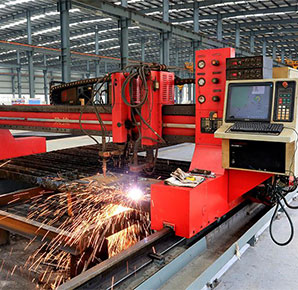 Flame cutting, also called oxyfuel cutting, is a common machining method for heavy plate.
Flame Cutting
-
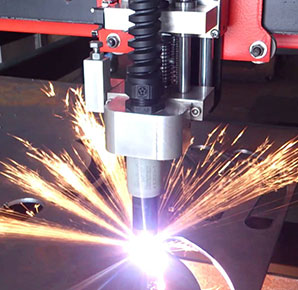
 Plasma cutting is a process that cuts through electrically conductive materials by means of an accelerated jet of hot plasma.
Plasma Cutting
-
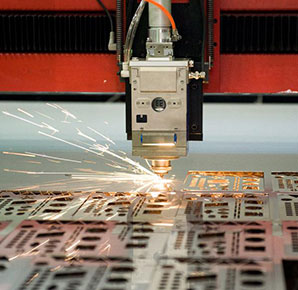
 Basically when cutting with the laser, the beam is focused on the material through the hole in the nozzle.
Laser Cutting
-
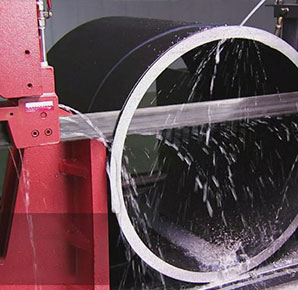 According to the form of the tool, sawing/ saw cutting is divided into bow sawing, circular sawing, band sawing and sawing of the grinding wheel.
Saw Cutting
Latest Products
-
 Machining involved: saw cutting, grinding, surface treatment
Carbon Steel Bars Customized Cutting
-
 Machining involved: saw cutting, grinding, surface treatment Application: construction structure
Profile Steel Cutting
-
 Our products cover the fields of construction machinery, power systems, material handling and transportation machinery, metall...
Carbon Steel Pipes
-
 Katalor can provide a wide range of laser cutting, plasma cutting, flame cutting or steel machining parts fabrication.Carbon S...
Carbon Steel Ellipsoidal Head with Cutting Hol
-
 Machining involved: flame cutting, beveling Application: engineering and ships building
Mild Steel Heavy Plates Cutting
-
 Katalor can provide a wide range of laser cutting, plasma cutting, flame cutting or steel machining parts fabrication. Flame ...
Heavy Plates Flame Cutting
-
 Application: ships building, construction. Katalor can provide a wide range of laser cutting, plasma cutting, flame cutting or...
Mild Steel Angle Cutting Parts
-
 Material: stainless steel. Laser cutting: high precision, fastest cutting method, suitable for cutting iron steel within 20mm....
Automobile Steel Parts
CONTACT US
No limited to time and space, you can call for our online-service personnel for consultation, or fill in the table below for an enquiry. Your message will be promptly resolved.
- Tel:+86-21-61182423
- Fax:+86-21-61182425
- E-mail:[email protected]
- Skype:shanghai.katalor
- Address:Unit 6,lane 2500,xiupu Road,Kangqiao Industrial Area,Pudong New District,Shanghai
- Online Consultation
- After-sales Engineer