


140 I-beam processing: cutting, drilling, welding
2026-07-07
140 I-beams are a common type of structural steel, named for their cross-sectional shape resembling the Chinese character "工" (gong). Their specifications indicate a height of 140 millimeters. They are widely used in various building structures and engineering frames, bearing the main load-bearing function.
Cutting: This is the high-quality step in processing, aimed at obtaining the required length of steel. Common methods include flame cutting, sawing, and shearing.
Flame cutting is suitable for thicker plates or irregular shapes, but it results in a larger heat-affected zone, potentially altering the local properties of the steel.
Sawing (such as band saws and circular saws) produces a smooth, precise cut and is a common method for obtaining accurate lengths.
Shearing is highly efficient but typically suitable for thinner or smaller sections of steel. For 140mm I-beams, a large, specialized shearing machine is required, and care must be taken to prevent cross-sectional deformation.
Straightening: Steel may bend or twist after transportation, storage, or heating during cutting. Various straightening methods are used. Mechanical straightening is the primary method, applying reverse pressure to the bent areas using a straightening machine or press to restore straightness. During operation, multiple points should be applied gradually to avoid over-straightening or causing new damage.
Drilling and Hole Opening: Holes need to be drilled in the web or flanges of the I-beam for bolt connections. Magnetic drills or radial drills are typically used. Key techniques include accurately locating the hole center and using appropriate drill bits and cutting fluid to ensure smooth hole walls, accurate dimensions, and avoidance of burrs or cracks. For large groups of holes, templates are needed to ensure consistent hole positions.
Welding and Splicing: When the length of a single piece is insufficient or complex components are required, welding splicing is necessary. Before welding, select matching welding rods or wires based on the material (e.g., Q235B, Q355B) and strictly follow the process qualification requirements. For 140 H-beams, common welds include flange butt welds, web butt welds, and fillet welds to stiffeners. During welding, it is necessary to control the interpass temperature and welding sequence to reduce welding stress and deformation. After welding, slag must be cleaned and a visual inspection performed.
Cutting: This is the high-quality step in processing, aimed at obtaining the required length of steel. Common methods include flame cutting, sawing, and shearing.
Flame cutting is suitable for thicker plates or irregular shapes, but it results in a larger heat-affected zone, potentially altering the local properties of the steel.
Sawing (such as band saws and circular saws) produces a smooth, precise cut and is a common method for obtaining accurate lengths.
Shearing is highly efficient but typically suitable for thinner or smaller sections of steel. For 140mm I-beams, a large, specialized shearing machine is required, and care must be taken to prevent cross-sectional deformation.
Straightening: Steel may bend or twist after transportation, storage, or heating during cutting. Various straightening methods are used. Mechanical straightening is the primary method, applying reverse pressure to the bent areas using a straightening machine or press to restore straightness. During operation, multiple points should be applied gradually to avoid over-straightening or causing new damage.
Drilling and Hole Opening: Holes need to be drilled in the web or flanges of the I-beam for bolt connections. Magnetic drills or radial drills are typically used. Key techniques include accurately locating the hole center and using appropriate drill bits and cutting fluid to ensure smooth hole walls, accurate dimensions, and avoidance of burrs or cracks. For large groups of holes, templates are needed to ensure consistent hole positions.
Welding and Splicing: When the length of a single piece is insufficient or complex components are required, welding splicing is necessary. Before welding, select matching welding rods or wires based on the material (e.g., Q235B, Q355B) and strictly follow the process qualification requirements. For 140 H-beams, common welds include flange butt welds, web butt welds, and fillet welds to stiffeners. During welding, it is necessary to control the interpass temperature and welding sequence to reduce welding stress and deformation. After welding, slag must be cleaned and a visual inspection performed.
CUTTING METHOD

-
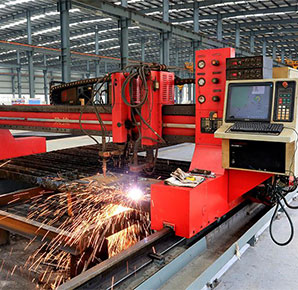 Flame cutting, also called oxyfuel cutting, is a common machining method for heavy plate.
Flame Cutting
-
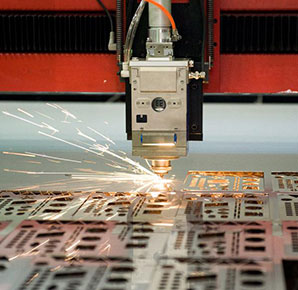 Plasma cutting is a process that cuts through electrically conductive materials by means of an accelerated jet of hot plasma.
Plasma Cutting
-
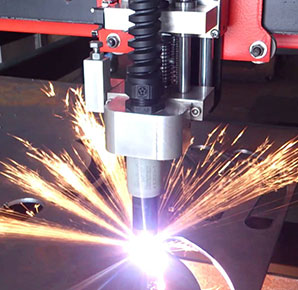 Basically when cutting with the laser, the beam is focused on the material through the hole in the nozzle.
Laser Cutting
-
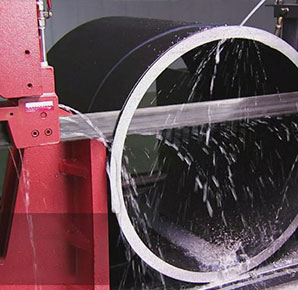 According to the form of the tool, sawing/ saw cutting is divided into bow sawing, circular sawing, band sawing and sawing of the grinding wheel.
Saw Cutting
Latest Products
-
 Material: stainless steel Machining involved: plasma cutting, grinding, polishing
Plasma Cutting Stainless Steel Plate
-
 Katalor can provide a wide range of laser cutting, plasma cutting, flame cutting or steel machining parts fabrication.Carbon S...
Carbon Steel Ellipsoidal Head with Cutting Hol
-
 Katalor can provide a wide range of laser cutting, plasma cutting, flame cutting or steel machining parts fabrication. Flame ...
Heavy Plates Flame Cutting
-
 Customized Heavy Plates Cutting Parts are for Engineering Machinery. Material: carbon steel Machining involved: flame cutting...
Customized Heavy Plates Cutting Parts
-
 Special Shaped Steel Cutting is for Construction.
Special Shaped Steel Cutting for Construction
-
 Material: stainless steel Machining involved: flame cutting, polishing
Stainless Steel Seamless Tubes Cutting
-
 Carbon steel I-beams can be used in engineering construction, structural building , bridges and ships construction. Machining...
I-beam Steel Manufacturing
-
 Machining involved: saw cutting, grinding, surface treatment
Carbon Steel Bars Customized Cutting
CONTACT US
No limited to time and space, you can call for our online-service personnel for consultation, or fill in the table below for an enquiry. Your message will be promptly resolved.
- Tel:+86-21-61182423
- Fax:+86-21-61182425
- E-mail:[email protected]
- Skype:shanghai.katalor
- Address:Unit 6,lane 2500,xiupu Road,Kangqiao Industrial Area,Pudong New District,Shanghai
- Online Consultation
- After-sales Engineer