


Edge Quality and Its Impact on Welding in Cut-to-Size Steel Plates
2026-07-03
Edge quality is one of the most critical factors affecting the welding performance of cut-to-size steel plates. Whether the plates are processed by laser cutting, plasma cutting, oxy-fuel cutting, or waterjet cutting, the condition of the cut edge directly influences weld penetration, joint strength, and fabrication efficiency. Manufacturers in pressure vessel, shipbuilding, bridge construction, and heavy equipment industries increasingly prioritize high-quality cut edges to reduce welding defects and production costs.
A high-quality edge is characterized by minimal burrs, low surface roughness, accurate dimensions, and a narrow or nonexistent heat-affected zone (HAZ). These characteristics improve weld fit-up, reduce filler metal consumption, and ensure uniform heat distribution during welding. In contrast, rough edges or excessive slag often require additional grinding, increasing labor costs and production time.
Experimental comparisons conducted on 25 mm ASTM A36 steel plates revealed significant differences between cutting methods. Laser-cut specimens achieved an average edge roughness of Ra 2.8–3.5 μm, while plasma-cut edges measured Ra 8.0–10.5 μm with a heat-affected zone of approximately 1.5 mm. During MAG welding tests, laser-cut joints showed 98.6% weld penetration consistency, whereas plasma-cut samples experienced nearly 12% more porosity due to residual oxides and uneven edge geometry.
Edge quality also affects mechanical performance after welding. Tensile testing of welded S355 structural steel plates demonstrated that specimens with precision-machined or laser-cut edges reached an average tensile strength of 552 MPa, while poorly prepared edges reduced joint strength by approximately 6–8%. Fatigue testing further indicated that smoother weld toes and cleaner edge preparation increased fatigue life by nearly 20%, making edge quality especially important for dynamically loaded structures such as cranes, bridges, and offshore platforms.
To achieve optimal welding performance, manufacturers should select cutting technologies based on plate thickness, steel grade, and fabrication requirements. Combining precision cutting with proper edge cleaning and welding procedures minimizes defects, improves structural reliability, and enhances overall manufacturing efficiency.
A high-quality edge is characterized by minimal burrs, low surface roughness, accurate dimensions, and a narrow or nonexistent heat-affected zone (HAZ). These characteristics improve weld fit-up, reduce filler metal consumption, and ensure uniform heat distribution during welding. In contrast, rough edges or excessive slag often require additional grinding, increasing labor costs and production time.
Experimental comparisons conducted on 25 mm ASTM A36 steel plates revealed significant differences between cutting methods. Laser-cut specimens achieved an average edge roughness of Ra 2.8–3.5 μm, while plasma-cut edges measured Ra 8.0–10.5 μm with a heat-affected zone of approximately 1.5 mm. During MAG welding tests, laser-cut joints showed 98.6% weld penetration consistency, whereas plasma-cut samples experienced nearly 12% more porosity due to residual oxides and uneven edge geometry.
Edge quality also affects mechanical performance after welding. Tensile testing of welded S355 structural steel plates demonstrated that specimens with precision-machined or laser-cut edges reached an average tensile strength of 552 MPa, while poorly prepared edges reduced joint strength by approximately 6–8%. Fatigue testing further indicated that smoother weld toes and cleaner edge preparation increased fatigue life by nearly 20%, making edge quality especially important for dynamically loaded structures such as cranes, bridges, and offshore platforms.
To achieve optimal welding performance, manufacturers should select cutting technologies based on plate thickness, steel grade, and fabrication requirements. Combining precision cutting with proper edge cleaning and welding procedures minimizes defects, improves structural reliability, and enhances overall manufacturing efficiency.
CUTTING METHOD

-
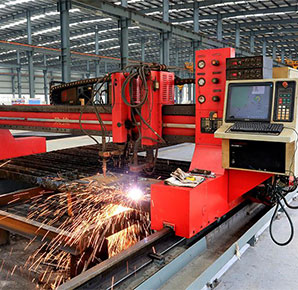 Flame cutting, also called oxyfuel cutting, is a common machining method for heavy plate.
Flame Cutting
-
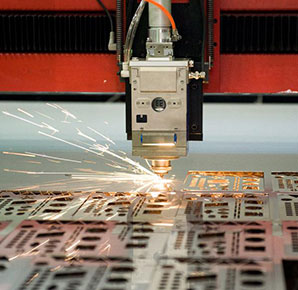 Plasma cutting is a process that cuts through electrically conductive materials by means of an accelerated jet of hot plasma.
Plasma Cutting
-
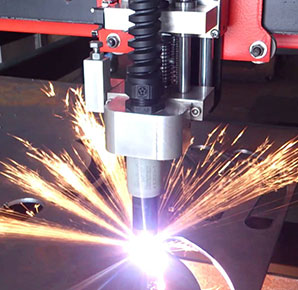 Basically when cutting with the laser, the beam is focused on the material through the hole in the nozzle.
Laser Cutting
-
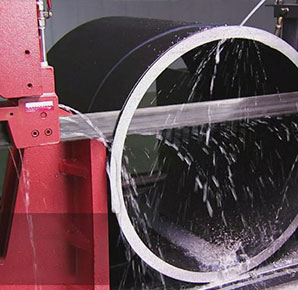 According to the form of the tool, sawing/ saw cutting is divided into bow sawing, circular sawing, band sawing and sawing of the grinding wheel.
Saw Cutting
Latest Products
-
 Machining involved: plasma cutting, grinding, polishing Application: construction
Stainless Steel Cutting Parts
-
 Machining involved: cutting, grinding
Metal Steel Cutting for Construction Machinery
-
 Katalor can provide a wide range of laser cutting, plasma cutting, flame cutting or steel machining parts fabrication. Flame ...
Heavy Plates Flame Cutting
-
 Material: stainless steel 304 Machining involved: cutting, grinding, drilling, beveling, surface treatment
Stainless Steel Tube Machining Parts
-
 Machining involved: flame cutting, beveling Application: engineering and ships building
Mild Steel Heavy Plates Cutting
-
 Machining involved: saw cutting, grinding, surface treatment Application: construction structure
Profile Steel Cutting
-
 Machining involved: saw cutting, grinding, surface treatment
Saw Cutting for Alloy Steel Bars
-
 Machining involved: cutting, grinding, beveling Application: shipsbuilding and marine industry
Carbon Steel Pipes Cutting
CONTACT US
No limited to time and space, you can call for our online-service personnel for consultation, or fill in the table below for an enquiry. Your message will be promptly resolved.
- Tel:+86-21-61182423
- Fax:+86-21-61182425
- E-mail:[email protected]
- Skype:shanghai.katalor
- Address:Unit 6,lane 2500,xiupu Road,Kangqiao Industrial Area,Pudong New District,Shanghai
- Online Consultation
- After-sales Engineer