


What are the most common cutting methods for steel machining currently
The most prevalent cutting methods for steel machining currently mainly include flame cutting, plasma cutting, laser cutting, and waterjet cutting. Below is a detailed introduction to each:
Flame Cutting:
Principle: It utilizes the thermal energy of a gas flame (commonly acetylene or natural gas) to preheat the steel plate to its ignition point. Then, a high-pressure oxygen stream is applied to vigorously oxidize the metal, blowing away the molten slag generated during combustion to form a cut.
Characteristics: Low equipment cost, wide applicability, capable of cutting steel plates with thicknesses ranging from 1 millimeter to 1.2 meters. However, it has a large heat-affected zone, significant thermal deformation, a rough cut surface, and is prone to slag hanging.
Applications: It is commonly used for cutting thick steel plates in fields such as shipbuilding and heavy machinery manufacturing.
Plasma Cutting:
Principle: It uses the heat from a high-temperature plasma arc to locally melt and vaporize the metal, and then expels the molten metal using the high-speed momentum of the plasma to form a cut.
Characteristics: Fast cutting speed, high precision, good cut surface quality, and minimal thermal deformation. It is suitable for cutting carbon plates, copper and aluminum materials, as well as nickel-titanium metals, but the equipment cost is relatively high.
Applications: It is widely used for cutting stainless steel, non-ferrous metals, and medium-to-thick carbon steel.
Laser Cutting:
Principle: It employs a high-energy laser beam to irradiate the surface of the steel plate, causing the metal to locally melt or vaporize. The molten metal is then blown away using high-pressure gas to achieve cutting.
Characteristics: Fast cutting speed, high precision, excellent cut surface quality, and a small heat-affected zone. It is suitable for efficient and precise cutting of thin steel plates, but the equipment and maintenance costs are relatively high.
Applications: It is commonly used in fields such as automobile manufacturing and precision machining.
Waterjet Cutting:
Principle: It uses a high-pressure water stream (which may be mixed with abrasives) to cut metal by ejecting it through an extremely fine nozzle.
Characteristics: Environmentally friendly, safe, widely applicable, capable of cutting any material without thermal effects. However, the cutting speed is relatively slow, and specialized equipment is required.
Applications: It is suitable for cutting heat-sensitive or easily deformable materials, such as composites and ceramics.
CUTTING METHOD

-
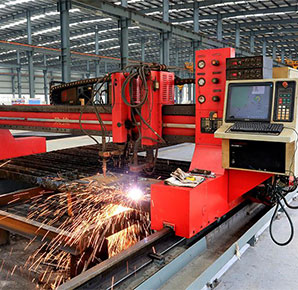 Flame cutting, also called oxyfuel cutting, is a common machining method for heavy plate.
Flame Cutting
-
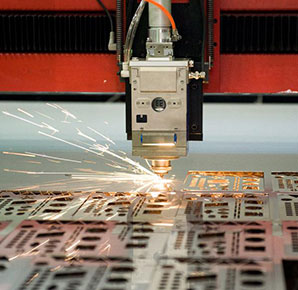 Plasma cutting is a process that cuts through electrically conductive materials by means of an accelerated jet of hot plasma.
Plasma Cutting
-
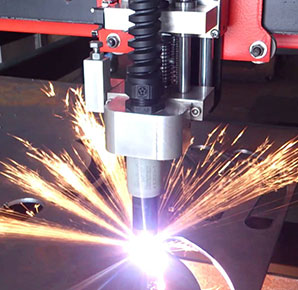 Basically when cutting with the laser, the beam is focused on the material through the hole in the nozzle.
Laser Cutting
-
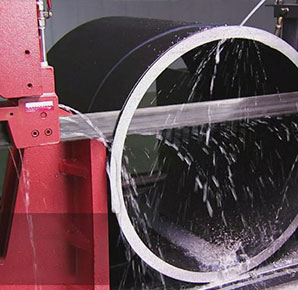 According to the form of the tool, sawing/ saw cutting is divided into bow sawing, circular sawing, band sawing and sawing of the grinding wheel.
Saw Cutting
Latest Products
-
 Katalor can provide a wide range of laser cutting, plasma cutting, flame cutting or steel machining parts fabrication.Carbon S...
Carbon Steel Ellipsoidal Head with Cutting Hol
-
 Material: stainless steel Machining involved: plasma cutting, grinding, polishing
Plasma Cutting Stainless Steel Plate
-
 Machining involved: cutting, grinding, beveling Application: shipsbuilding and marine industry
Carbon Steel Pipes Cutting
-
 Material: carbon steel. Machining involved: saw cutting; Whole inspection procedures (IQC, PQC and FQC) and QA plan are carri...
Square Pipes Cutting
-
 Material: stainless steel Machining involved: flame cutting, polishing
Stainless Steel Seamless Tubes Cutting
-
 Machining involved: cutting, grinding
Metal Steel Cutting for Construction Machinery
-
 Machining involved: saw cutting, grinding, surface treatment
Carbon Steel Bars Customized Cutting
-
 Our products cover the fields of construction machinery, power systems, material handling and transportation machinery, metall...
Stainless Steel Plates Cutting
CONTACT US
No limited to time and space, you can call for our online-service personnel for consultation, or fill in the table below for an enquiry. Your message will be promptly resolved.
- Tel:+86-21-61182423
- Fax:+86-21-61182425
- E-mail:[email protected]
- Skype:shanghai.katalor
- Address:Unit 6,lane 2500,xiupu Road,Kangqiao Industrial Area,Pudong New District,Shanghai
- Online Consultation
- After-sales Engineer