


What are the machining methods for Customized Steel Tube for Construction
The machining methods for Customized Steel Tube for Construction mainly include the following:
Turning:
Definition: Fixing the workpiece on a rotating workpiece clamping device and gradually cutting away material from the workpiece using a cutting tool to obtain the desired shape and size.
Application: Suitable for manufacturing cylindrical parts, such as the end faces and outer cylindrical surfaces of steel tubes. Through turning, the dimensions and shape of the steel tube can be precisely controlled to meet specific requirements in construction.
Milling:
Definition: Cutting material from the surface of a workpiece by rotating a cutting tool to create complex shapes such as flat surfaces, concave and convex surfaces, and gears.
Application: In the processing of customized construction steel tubes, milling can be used to machine the end faces, sides, or inner surfaces of the steel tube to form the desired shape and size. For example, milling can be used to process the connecting parts of the steel tube for connection with other components.
Drilling:
Definition: Cutting material from a workpiece using a rotating drill bit to form holes of the required diameter and depth.
Application: In customized construction steel tubes, drilling is commonly used to create connecting holes, installation holes, etc. These holes can be used to install fasteners such as bolts and nuts or for connecting with other components.
Grinding:
Definition: Gradually cutting away or grinding down material on the surface of a workpiece using an abrasive tool to obtain the desired shape, size, and surface quality.
Application: Grinding is often used for processing steel tube components that require high precision and surface quality. Through grinding, defects such as burrs and scratches on the surface of the steel tube can be removed, improving its surface finish and accuracy.
Boring:
Definition: Used for machining internal circular holes in a workpiece by rotating a cutting tool inside an existing hole to achieve precise dimensions and flatness.
Application: In customized construction steel tubes, boring can be used when precise-sized holes need to be machined inside the tube (e.g., for installing bearings, transmission devices, etc.).
Other Machining Methods:
Besides the above-mentioned common machining methods, there may also include planing, shaping, electrical discharge machining (EDM), etc. These machining methods may be used in the processing of customized construction steel tubes in specific situations to meet specific shape, size, and surface quality requirements.
In summary, there are various machining methods for customized construction steel tubes, and the specific method chosen depends on factors such as the material, shape, size, and required surface quality of the steel tube. During the actual processing, it is necessary to select and optimize based on specific conditions to ensure processing efficiency and product quality.
CUTTING METHOD

-
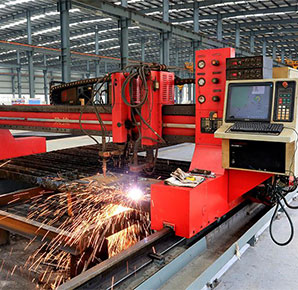 Flame cutting, also called oxyfuel cutting, is a common machining method for heavy plate.
Flame Cutting
-
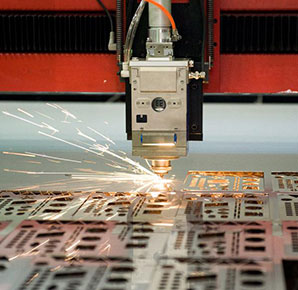 Plasma cutting is a process that cuts through electrically conductive materials by means of an accelerated jet of hot plasma.
Plasma Cutting
-
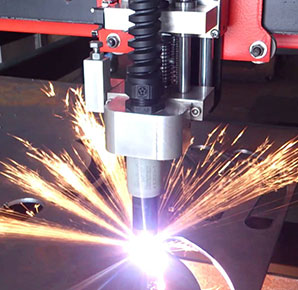 Basically when cutting with the laser, the beam is focused on the material through the hole in the nozzle.
Laser Cutting
-
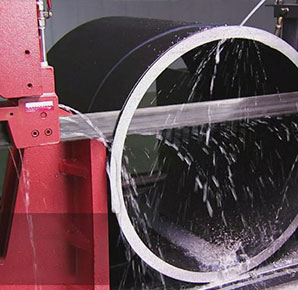 According to the form of the tool, sawing/ saw cutting is divided into bow sawing, circular sawing, band sawing and sawing of the grinding wheel.
Saw Cutting
Latest Products
-
 Katalor can provide a wide range of laser cutting, plasma cutting, flame cutting or steel machining parts fabrication. Flame ...
Heavy Plates Flame Cutting
-
 Katalor can provide a wide range of laser cutting, plasma cutting, flame cutting or steel machining parts fabrication.Carbon S...
Carbon Steel Ellipsoidal Head with Cutting Hol
-
 Customized Steel Tube for Construction Equipped with laser cutting, CNC shearing, punching, bending, automatic riveting, auto...
Customized Steel Tube for Construction
-
 Our products cover the fields of construction machinery, power systems, material handling and transportation machinery, metall...
Stainless Steel Plates Cutting
-
 Customized Heavy Plates Cutting Parts are for Engineering Machinery. Material: carbon steel Machining involved: flame cutting...
Customized Heavy Plates Cutting Parts
-
 Machining involved: saw cutting, grinding, surface treatment
Saw Cutting for Alloy Steel Bars
-
 Material: stainless steel Machining involved: plasma cutting, grinding, polishing
Plasma Cutting Stainless Steel Plate
-
 Machining involved: flame cutting, beveling Application: engineering and ships building
Mild Steel Heavy Plates Cutting
CONTACT US
No limited to time and space, you can call for our online-service personnel for consultation, or fill in the table below for an enquiry. Your message will be promptly resolved.
- Tel:+86-21-61182423
- Fax:+86-21-61182425
- E-mail:[email protected]
- Skype:shanghai.katalor
- Address:Unit 6,lane 2500,xiupu Road,Kangqiao Industrial Area,Pudong New District,Shanghai
- Online Consultation
- After-sales Engineer