


Common Issues and Solutions in Flame Cutting
Flame Cutting, a prevalent metal cutting process, may encounter several issues during practical operations. Below are some common problems and their corresponding solutions:
I. Poor Cutting Surface Quality
Problem Description:
The cut is not straight, too wide, with collapsing edges on the upper side, indentations, or excessively deep cutting marks.
Solution:
Check and adjust the pressure of preheating oxygen and cutting oxygen to ensure they are appropriate, neither too high nor too low.
Optimize the position of the preheating point to ensure accuracy, avoiding deviation caused by the movement or vibration of the casting billet.
Adjust the cutting speed to match the oxidation rate of the metal within the cut, achieving a smooth cutting surface.
II. Cutting Interruption or Inability to Cut
Problem Description:
The flame suddenly extinguishes during the cutting process, or the cutting torch fails to continue cutting.
Solution:
Inspect the cutting nozzle for clogging or burnout, and clean or replace it promptly.
Check if the cylinder of the cutting torch is clamping the casting billet tightly, ensuring good sealing without leakage.
Verify the stability of the cutting medium supply (such as oxygen and fuel gas), ensuring the medium pressure is within the specified range.
III. Equipment Malfunction
Problem Description:
The cutting equipment malfunctions, such as cylinders failing to operate or electrical components failing.
Solution:
Check the equipment's power supply and electrical connections to ensure the electrical components are functioning normally.
Inspect the cooling condition of the cylinders and hoses to prevent seal failure and hose damage due to high temperatures.
Regularly maintain and service the equipment, including cleaning dust, checking fasteners, and replacing worn parts.
IV. Improper Operation
Problem Description:
Operators are unfamiliar with the equipment or process parameters, resulting in unstable cutting quality.
Solution:
Train operators to familiarize them with the equipment's operation methods and process parameters.
Provide detailed operation manuals and process guidance to help operators master correct operation methods.
Encourage operators to continuously summarize experience in practical operations to improve their skills.
V. Safety Measures
Problem Description:
There are potential safety hazards such as fire and explosion during the flame cutting process.
Solution:
Ensure the working area is well-ventilated to avoid gas accumulation.
Wear appropriate protective equipment during the cutting process, such as safety glasses, gloves, and fire-resistant clothing.
Regularly inspect and maintain safety equipment, such as fire extinguishers and emergency stop buttons.
Comply with safety operating procedures to avoid safety accidents caused by violations.
In summary, the potential issues encountered during flame cutting involve cutting surface quality, cutting interruption, equipment malfunction, improper operation, and safety measures. By checking and adjusting process parameters, optimizing equipment performance, improving operation skills, and strengthening safety measures, these problems can be effectively addressed, enhancing the efficiency and quality of flame cutting.
CUTTING METHOD

-
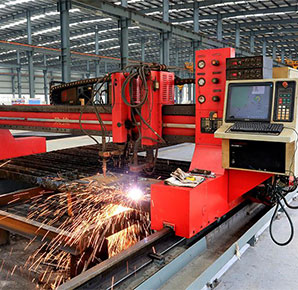 Flame cutting, also called oxyfuel cutting, is a common machining method for heavy plate.
Flame Cutting
-
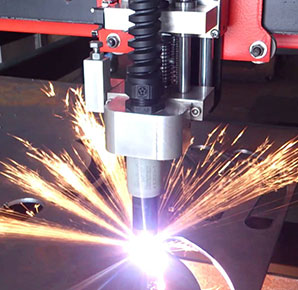
 Plasma cutting is a process that cuts through electrically conductive materials by means of an accelerated jet of hot plasma.
Plasma Cutting
-
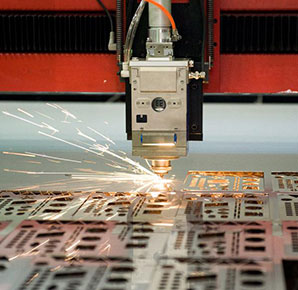
 Basically when cutting with the laser, the beam is focused on the material through the hole in the nozzle.
Laser Cutting
-
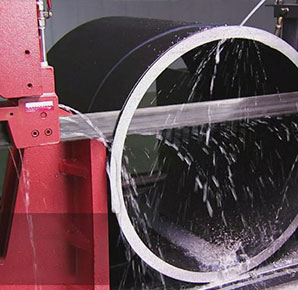 According to the form of the tool, sawing/ saw cutting is divided into bow sawing, circular sawing, band sawing and sawing of the grinding wheel.
Saw Cutting
Latest Products
-
 Material: stainless steel Machining involved: plasma cutting, grinding, polishing
Plasma Cutting Stainless Steel Plate
-
 Shape: customized. Custom is our specialty, materials and finish coating can be various.
Metal Steel Plate Customized Machining
-
 Machining involved: plasma cutting, grinding, polishing Application: construction
Stainless Steel Cutting Parts
-
 Material: carbon steel. Machining involved: saw cutting; Whole inspection procedures (IQC, PQC and FQC) and QA plan are carri...
Square Pipes Cutting
-
 Material: carbon steel Machining involved: flame cutting, stamping, sheet metal, grinding Application: manfuacturing
Heavy Plates Cutting Parts
-
 Machining involved: saw cutting, grinding, surface treatment Application: construction structure
Profile Steel Cutting
-
 Machining involved: cutting, grinding, beveling Application: shipsbuilding and marine industry
Carbon Steel Pipes Cutting
-
 Machining involved: cutting, bending, drilling, surface treatment
Cutting Alloy Steel Equal Angles
CONTACT US
No limited to time and space, you can call for our online-service personnel for consultation, or fill in the table below for an enquiry. Your message will be promptly resolved.
- Tel:+86-21-61182423
- Fax:+86-21-61182425
- E-mail:[email protected]
- Skype:shanghai.katalor
- Address:Unit 6,lane 2500,xiupu Road,Kangqiao Industrial Area,Pudong New District,Shanghai
- Online Consultation
- After-sales Engineer